
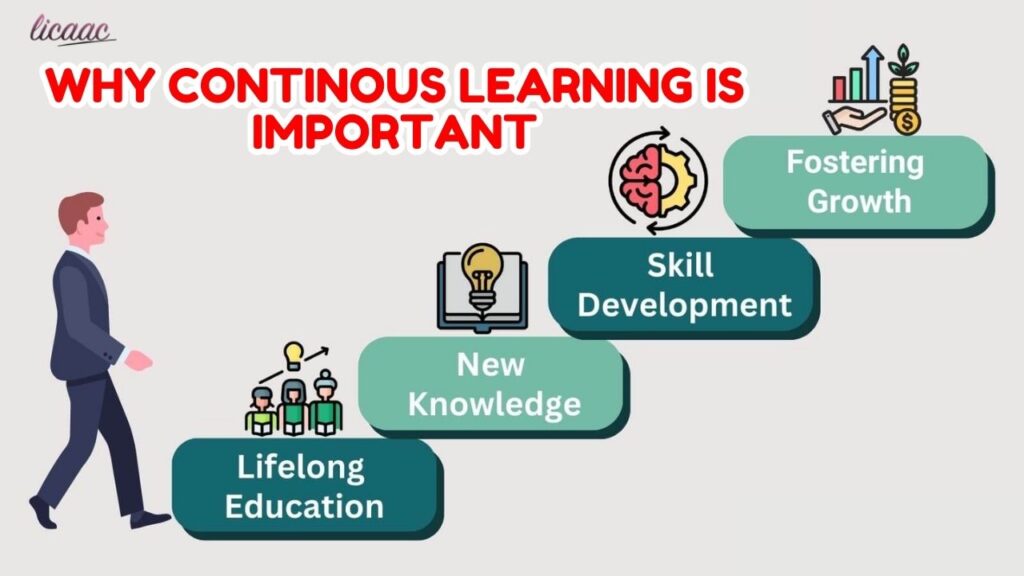
The fast-paced world of entrepreneurship demands more than a solid business plan or initial funding—it requires the ability to adapt constantly. One of the most powerful tools for survival and success is continuous learning: the ongoing, deliberate pursuit of new knowledge, skills, and perspectives. Entrepreneurs who treat learning as a core habit don’t just react to change—they thrive on it.
In today’s landscape, markets shift overnight due to technological advances, economic fluctuations, new regulations, or evolving customer expectations. What worked yesterday can become obsolete tomorrow. Rigid adherence to old strategies often leads to failure, while those who embrace lifelong learning pivot effectively, spot opportunities early, and build more resilient ventures.
Why Continuous Learning Fuels Adaptation in Entrepreneurship
- Staying Ahead of Rapid Change
The business environment evolves faster than ever. AI, blockchain, sustainability demands, and shifting consumer behaviors require constant updates. Entrepreneurs who commit to learning stay informed about emerging trends and technologies, allowing them to adjust strategies before competitors do. Without this, even brilliant ideas can falter against unforeseen disruptions. - Building Resilience Through Failure and Feedback
Every entrepreneurial journey includes setbacks—failed product launches, misjudged markets, or team challenges. Continuous learning turns these into lessons rather than dead ends. By reflecting, seeking feedback, and acquiring new insights (from books, mentors, courses, or peers), entrepreneurs develop resilience. They learn to iterate quickly, refine their approach, and bounce back stronger. - Sparking Innovation and Creativity
Fresh knowledge cross-pollinates ideas. Reading about advancements in one field can inspire breakthroughs in another. Exposure to diverse viewpoints—through podcasts, networking events, or online communities—helps entrepreneurs think outside conventional boundaries, leading to innovative products, services, or business models that differentiate them in crowded markets. - Enhancing Decision-Making and Leadership
Better-informed leaders make sharper decisions. Continuous learning sharpens analytical skills, emotional intelligence, and strategic thinking. It also models a growth mindset for teams, fostering a culture where adaptation becomes collective strength rather than top-down mandate.
Practical Ways Entrepreneurs Can Embrace Continuous Learning
- Set aside dedicated time — Treat learning like a non-negotiable meeting. Even 30 minutes daily for reading industry reports, listening to podcasts, or taking short online courses adds up.
- Diversify sources — Combine formal education (e.g., Coursera, MasterClass) with real-world input: mentors, peer masterminds, industry conferences, or customer interviews.
- Apply immediately — Knowledge without action fades. Test new concepts in small experiments—prototype a feature based on recent tech learnings or tweak marketing after studying behavioral economics.
- Reflect regularly — Keep a learning journal to note key takeaways, what worked, and what to adjust. Review quarterly to track progress.
- Build a network of learners — Surround yourself with curious, growth-oriented people. Join entrepreneur communities or accountability groups to share insights and stay motivated.
Real-World Impact: Adaptation as a Superpower
History shows countless examples where adaptability through learning separated winners from the rest. Businesses that failed to evolve (think Kodak ignoring digital photography or Blockbuster dismissing streaming) were outpaced by those that did (Netflix pivoting from DVDs to streaming while continuously learning about viewer habits).
As an entrepreneur, your greatest asset isn’t your current knowledge—it’s your capacity to acquire new knowledge and apply it swiftly. In a world where change is the only constant, continuous learning isn’t optional; it’s the ultimate competitive edge.
Commit to it daily, and you’ll not only adapt—you’ll lead the change.


