
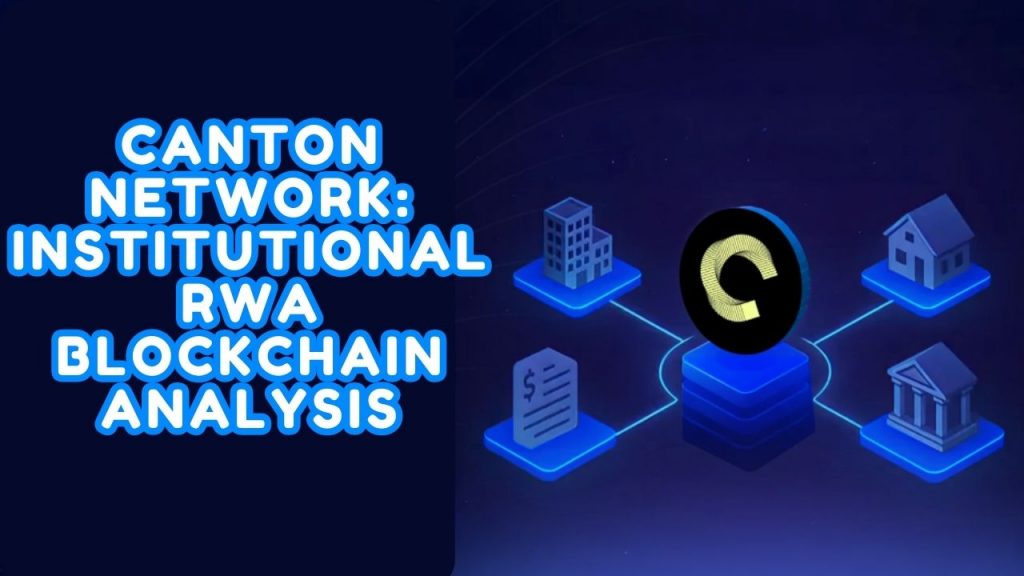
The Canton Network represents one of the most institutionally focused blockchain ecosystems in the crypto space as of early 2026. Developed by Digital Asset and launched in its mainnet phase around mid-2024, it positions itself as the first privacy-enabled, public Layer-1 blockchain designed specifically for regulated financial markets, real-world asset (RWA) tokenization, and the convergence of TradFi and DeFi.
What is the Canton Network?
Canton is built as a “network of networks” — a modular, interoperable system where financial institutions can run their own ledgers (subnets) while connecting via a shared Global Synchronizer backbone. This enables atomic, privacy-preserving transactions across parties without exposing sensitive data to the entire network.
Key features include:
- Configurable privacy using cryptographic techniques and Digital Asset’s Daml smart contract language, ensuring only involved parties see transaction details — a critical requirement for banks, custodians, and regulators.
- Horizontal scalability through its two-tier consensus and synchronization model, supporting high-volume institutional flows.
- Public yet permissioned controls, balancing open participation with compliance needs.
- Focus on RWA tokenization, repo markets, Treasuries, and tokenized deposits.
The network has seen major institutional momentum:
- Partnerships with heavyweights like DTCC (planning to tokenize DTC-custodied U.S. Treasuries on Canton in 2026), J.P. Morgan (intending to bring JPM Coin natively to the network), and others including Goldman Sachs, BNP Paribas, CBOE, Moody’s, and more from its 2023 consortium origins.
- Claims of massive on-chain activity: trillions in tokenized assets, billions in monthly repo volumes, and hundreds of billions in daily processed value — largely institutional rather than retail/DeFi speculation.
The native token, Canton Coin (CC), powers the ecosystem as a utility token for fees on the Global Synchronizer, incentives for validators, and rewards tied to real usage via a mint-and-burn model that burns tokens based on network activity.
Current Market Snapshot (as of February 7, 2026)
- Price: Around $0.17–$0.18 USD (up ~6% in the last 24 hours in recent data, though volatile and often correlated with broader market moves).
- Market Cap: Approximately $6.5 billion (ranking it in the top 20 cryptocurrencies).
- Circulating Supply: Roughly 38 billion CC (total supply dynamics influenced by burns and issuance).
- 24h Trading Volume: $25–$30 million+.
- Performance: CC has shown periods of outperformance vs. the broader market during altcoin rotations but also mirrors macro sell-offs (e.g., high correlations with S&P 500 and gold in risk-off environments).
Technical indicators (from sources like TradingView) recently leaned toward strong buy on moving averages, with neutral oscillators — though short-term volatility remains high.
Strengths and Bull Case
- Institutional Adoption Lead: Canton leads many L1s in RWA value and generates higher transaction fees than chains like Solana or Ethereum in certain periods, despite a lower valuation multiple — suggesting undervaluation relative to utility.
- Fee Generation & Tokenomics: Usage-based burns and rewards align incentives toward real economic activity rather than speculation.
- Regulatory Fit: Privacy + compliance make it attractive for banks and custodians hesitant on fully public chains.
- Momentum: DTCC/JPMorgan integrations, $135M funding for Digital Asset in 2025, and growing ecosystem (600+ validators, 30+ super validators, 200+ partners) signal accelerating traction.
- Long-term forecasts from some analysts see potential for significant upside if tokenization explodes (e.g., speculative targets up to several dollars in bullish 2026–2030 scenarios).
Risks and Bear Case
- Centralization Concerns: Governance is more centralized than pure public chains, with super validators and foundation oversight — potentially limiting retail hype and broader DeFi adoption.
- Competition: Other RWA-focused platforms (e.g., those on Ethereum, Polygon, or specialized chains) and emerging institutional blockchains could challenge dominance.
- Execution & Regulatory Risks: Tokenization pilots (e.g., Treasuries) face delays, regulatory hurdles, or limited scope.
- Retail vs. Institutional Divide: Low retail visibility and focus on B2B flows contribute to muted price action compared to meme-driven or DeFi-native tokens.
- Volatility tied to macro (rates, dollar strength) and broader crypto sentiment.
Outlook
Canton stands out as a serious contender in the institutional blockchain race — less about moonshots and more about plumbing the future of synchronized, tokenized capital markets. If RWA tokenization becomes mainstream (as many predict for 2026+), CC could benefit disproportionately from fee accrual and network effects. However, its success hinges on execution of major pilots and wider adoption beyond pilot phases.
For now, it’s a high-conviction institutional play with strong fundamentals but tempered retail excitement. Monitor key milestones like DTCC Treasury tokenization progress and any expansions of JPM Coin integration for potential catalysts.