
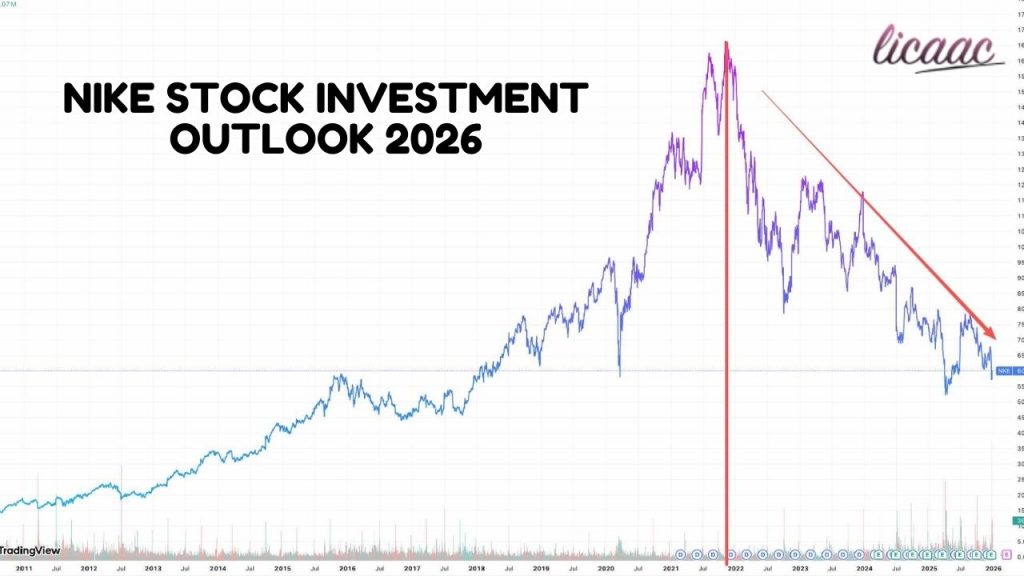
The investment outlook for Nike (NKE) stock as of mid-February 2026 remains cautious to moderately optimistic, with the shares trading in a depressed range around $61–$63 after significant declines from prior highs. Nike continues to navigate a challenging turnaround under new leadership, facing headwinds in key areas but showing early signs of stabilization and potential recovery in 2026 and beyond.
Current Stock Snapshot
Nike’s stock has been under pressure, recently breaking below its 50-day simple moving average and trading near multi-year lows (around 19–24% above its 52-week low but well below highs from 2024). The market cap hovers around $92–$94 billion, reflecting investor concerns over slowing growth, margin compression, and regional weaknesses.
Recent Performance and Earnings Highlights
In its fiscal 2026 Q2 results (ended November 30, 2025, reported December 2025):
- Revenue reached $12.4 billion, up 1% year-over-year (flat currency-neutral), slightly beating expectations.
- However, net income fell sharply to $0.8 billion (down 32%), with diluted EPS at $0.53 (still above some consensus but reflecting pressures).
- Gross margin declined to 40.6% (down 300 basis points), driven by restructuring costs, promotional activity, and underperformance in brands like Converse (down ~30% in sales).
- Challenges persist in Greater China (revenues down 16%, EBIT down nearly 50%) and overall wholesale dynamics, with ongoing inventory and demand issues.
Consensus estimates point to a tough fiscal 2026 overall, with EPS expected to decline ~27–28% year-over-year (to around $1.57–$2.05 range for the full year), and revenue growth flat to minimal. Recovery is anticipated in fiscal 2027, with EPS potentially rebounding +50%+ to ~$2.41.
Analyst Consensus and Price Targets
Wall Street remains divided but leans toward cautious optimism:
- Consensus rating: Moderate Buy (from ~25–36 analysts across sources like MarketBeat, TipRanks, and others), with a mix of Buy/Overweight recommendations outweighing Holds and rare Sells.
- Average 12-month price target: Around $74–$78 (ranging from lows of $35–$62 to highs of $110–$120), implying 20–27% upside from current levels (~$61–$63).
- Some bullish voices (e.g., Oppenheimer calling Nike a “dark horse” for 2026, or models projecting $130 by 2027 on margin recovery to ~10% and stable ~$47 billion revenue) see meaningful rebound potential if execution improves.
- Bearish takes highlight ongoing issues like wholesale “inventory stuffing,” fading shareholder returns, and no quick fix for China or Converse.
Reaching $100 in 2026 appears ambitious (requiring ~56–60% gains), with most analysts viewing it as a multi-year best-case scenario rather than a near-term reality, given expected EPS declines this fiscal year.
Key Opportunities and Risks for 2026
Bull Case:
- CEO Elliott Hill’s “Win Now” focus for 2026, emphasizing innovation (“Technology and Tradition” strategy), North American wholesale recovery (recent surges noted in some channels), and cost discipline (e.g., recent job cuts and restructuring).
- Nike’s enduring brand strength, market leadership in athletic apparel/footwear, and potential margin normalization could drive re-rating if demand stabilizes.
- Long-term tailwinds from digital/direct-to-consumer shifts and global sportswear growth.
Bear Case:
- Persistent macro pressures on discretionary spending, intense competition (e.g., from emerging brands), and regional drags (especially China).
- Ongoing restructuring pain, margin headwinds, and uncertain consumer recovery could prolong the downturn.
- Technical weakness (e.g., below key moving averages) signals near-term bearish momentum.
Overall Outlook
Nike stock looks like a classic turnaround play in early 2026—undervalued relative to historical norms but requiring patience. The consensus suggests moderate upside potential over the next 12 months if execution delivers, but fiscal 2026 may remain transitional with limited earnings momentum. Investors bullish on brand resilience and a successful reset might find an attractive entry point here, while those wary of near-term volatility could wait for clearer signs of stabilization (e.g., stronger Q3 results expected in March 2026).
This is not financial advice—stock investing involves risk, and conditions can change rapidly based on earnings, macro factors, or company updates. Always conduct your own research or consult a professional advisor.